Rafting
The country which prides itself because of its Gross Happiness Index rightly has enough reasons to keep its citizens as well as the tourists happy. Featuring undulating topography, the little Himalayan nation is famous for its extremely high altitudes and precipitous mountains and pristine nature.
About Rafting in Bhutan
The country which prides itself because of its Gross Happiness Index rightly has enough reasons to keep its citizens as well as the tourists happy. Featuring undulating topography, the little Himalayan nation is famous for its extremely high altitudes and precipitous mountains and pristine nature.
With a number of rugged, untamed rivers meandering through its map, Bhutan offers the perfect destination for river rafting. Mo Chhu, Paro Chhu in Punakha, Sankosh River, Mangde Chhu, Wang Chhu, Puna Tsang Chhu and the Dangme Chhu are considered to be the best for rafting due to their easy access and safe course.
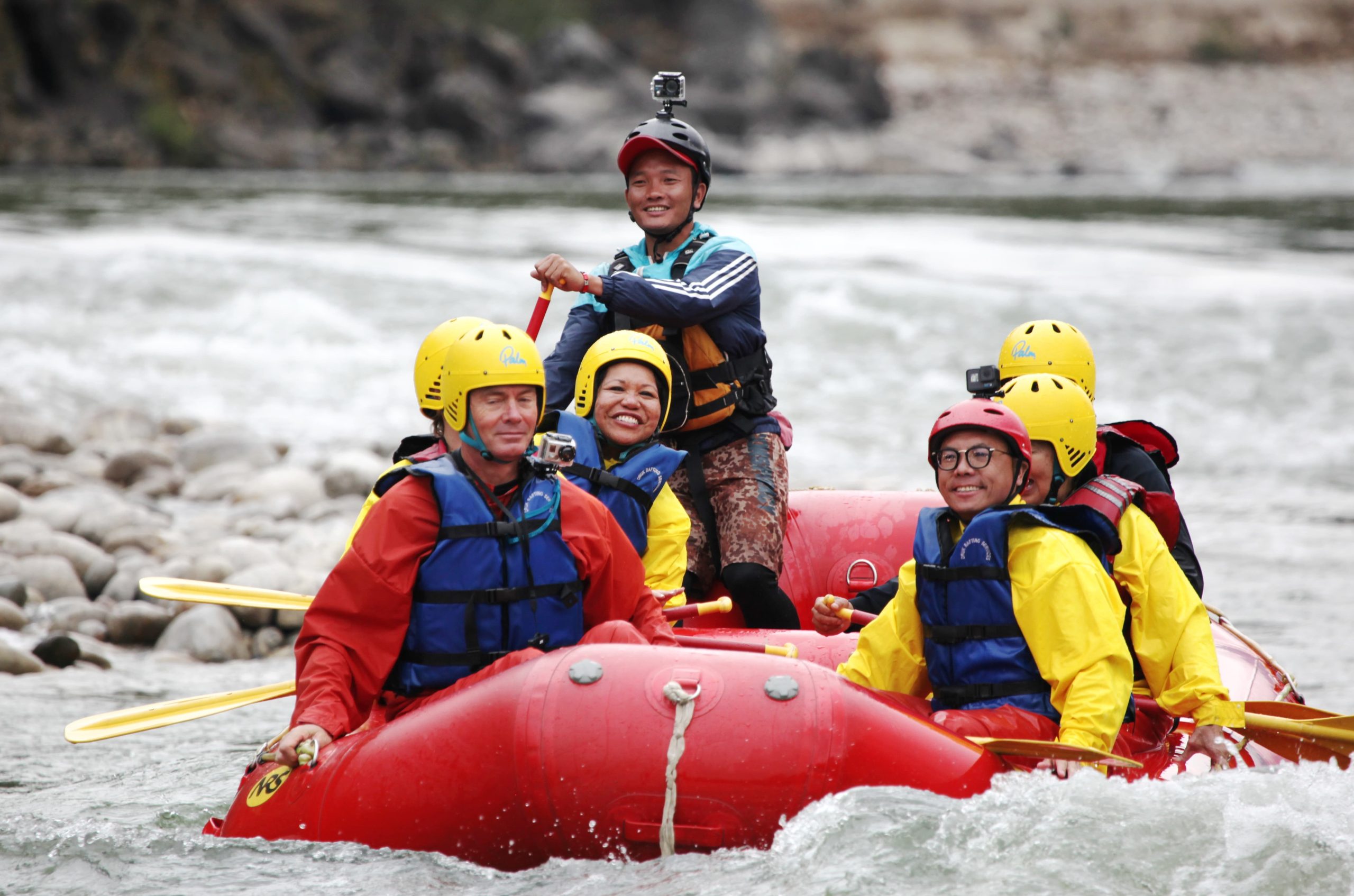
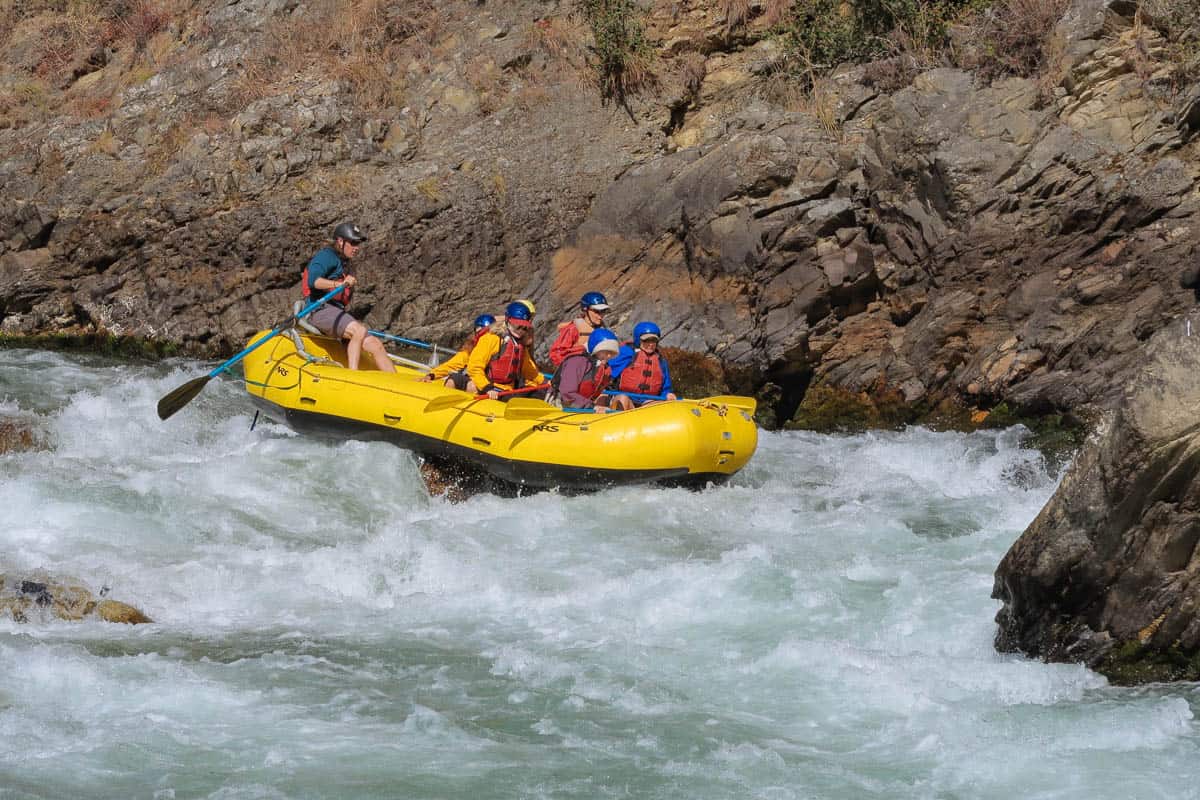
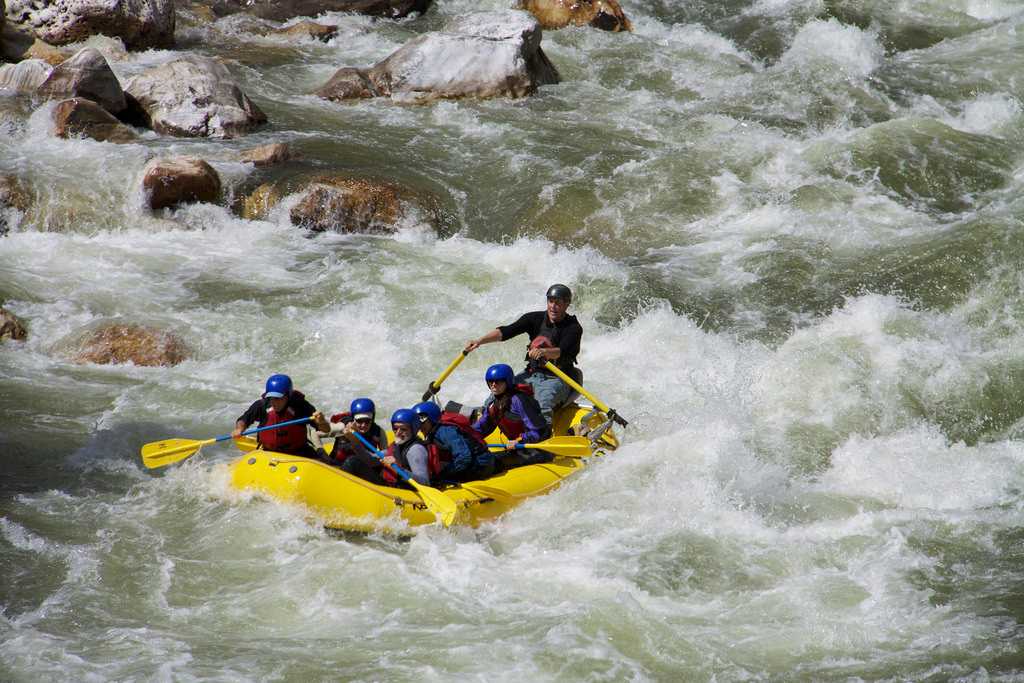
While river rafting is considered to be safer, white water rafting is more thrilling and adventurous.
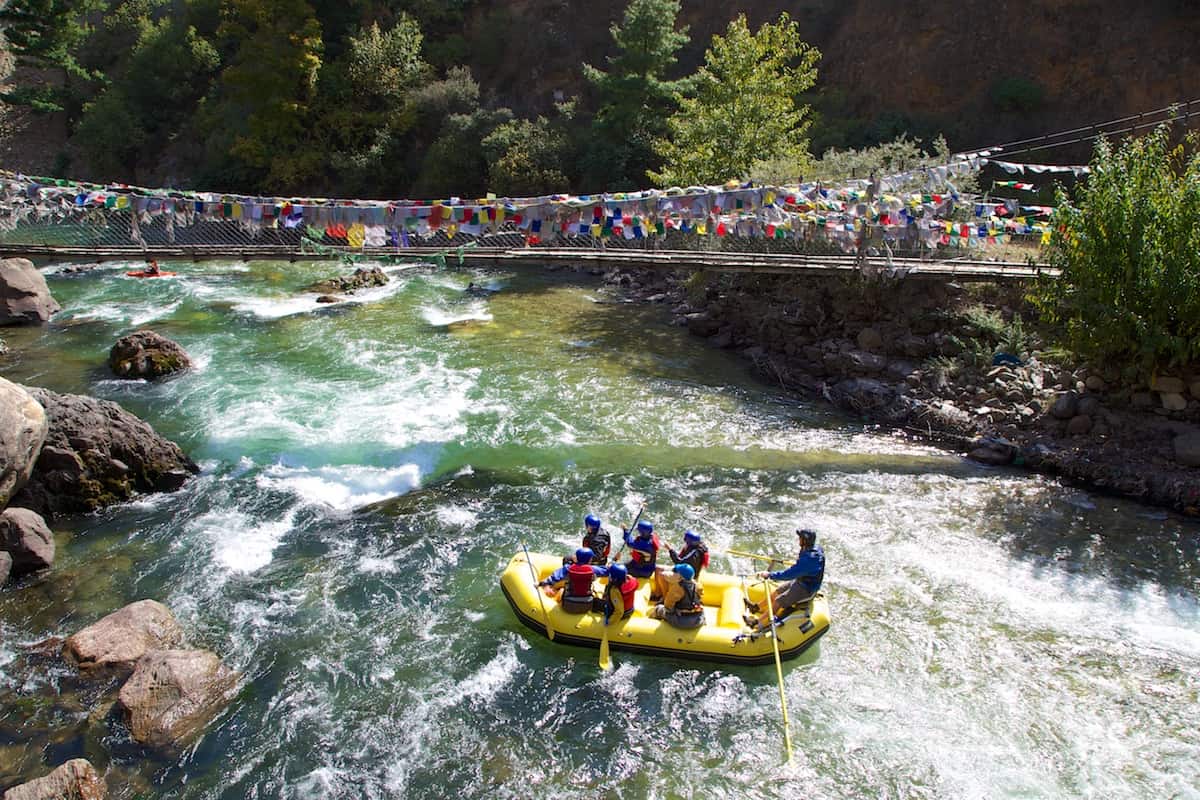
Paro Chhu River is more of a whitewater rafting due to its rapids and is quite adventurous. The view is breathtaking and one passed the longest suspension bridge in its course. If you are looking for an adrenaline rush, this would be your chance to have it all in the 16 km course.
Main Place for Rafting
01. Paro Chhu (Bondey – Isuna Bridge)
Location: Paro Valley, Western Bhutan
Length: Approximately 10 km (3 hours)
Difficulty: Class III-IV
Flow: About 500 cfs
Season: March – April
Craft: Kayaks recommended due to narrow and steep rapids
02. Upper Po chhu – (Wangthangkha – Samdingkha)
Location: Punakha Valley, Western Bhutan
Length: Approximately 7 km (2 hours)
Difficulty: Class III-IV
Flow: 2000 -3000 cfs
Season: March – April, October – November
Craft: Kayaks and Rafts
03: Mo Chhu – Tashitang Devil’s Gorge Section (Tashithang- Below Punakha Dzong)
Location: Punakha Valley, Western Bhutan
Length: 12 km, 5 -7 hours with scouting
Difficulty: Class V
Flow: 1000 cfs
Season: February/December.
Craft: Kayaks only (too steep for rafts)
(Caution: Higher than medium flows makes this run dangerous. High water runs are not recommended for amateurs)
For customization you can fill the form
Itinerary
Fly into Paro, Bhutan and experience the majestic views of the eastern Himalayas as you descend into the narrow Paro Valley.
Overnight at Paro.
After breakfast spend a few hours rafting a beautiful Himalayan stream, the Class III+ Paro Chhu. Along the way, we’ll stop at a famous iron bridge that was built by a Tibetan monk in the 14th century.
That afternoon we drive an hour east to Bhutan’s capital city, Thimphu, located at 7,656 feet in the Wang Chhu valley. We’ll check into our hotel and visit the largest sitting Buddha in the world.
After breakfast, sightseeing in Thimphu valley including visit to the following: The National Library, housing an extensive collection of priceless Buddhist manuscripts; the Institute for ZorigChusum (commonly known as the Painting School) where students undergo a 6-year training course in Bhutan’s 13 traditional arts and crafts. Later visit Textile Museum, which provides insight into Bhutan’s one of the most distinct art form. Also visit Simply Bhutan, a living museum and studio encapsulating the cultural heritage of the Bhutanese people.
After lunch take a short drive (15 km) to PangriZampa, 16th century one of the oldest monasteries in Bhutan located just north of Thimphu. Here is a monastic school where Buddhist student’s monks learn Lamaism and astrology based on Buddhist philosophy.
Afterwards visit to Buddha Point (KuenselPhodrang). Located at a short drive from Thimphu city centre, visitors can get a good overview of the Thimphu valley from the Buddha point (KuenselPhodrang). You can pay your obeisance and offer prayers to the Buddha, the largest statue in the country and then walk around and take a glimpse of the valley.
Full Day excursion to Taktshang Monastery or Tiger’s Nest (approx. 5 hours walk): It is one of the most famous of Bhutan’s monasteries, perched on the side of a cliff 900m above the Paro valley floor. It is said that Guru Rinpoche arrived here on the back of a tigress and meditated at this monastery and hence it is called ‘Tiger’s Nest’. This site has been recognised as a most sacred place and visited by ShabdrungNgawangNamgyal in 1646 and now visited by all Bhutanese at least once in their lifetime. On 19 April, 1998, a fire severely damaged the main structure of building but now this Bhutanese jewel has been restored to its original splendour.
Afternoon drive to Drukgyel Dzong, a ruined fortress where Bhutanese warriors fought Tibetan invaders centuries ago. The snowy dome of sacred Chomolhari, “mountain of goddess” can be seen in all her glory from the approach road to the Dzong.
Depart from Paro International Airport